

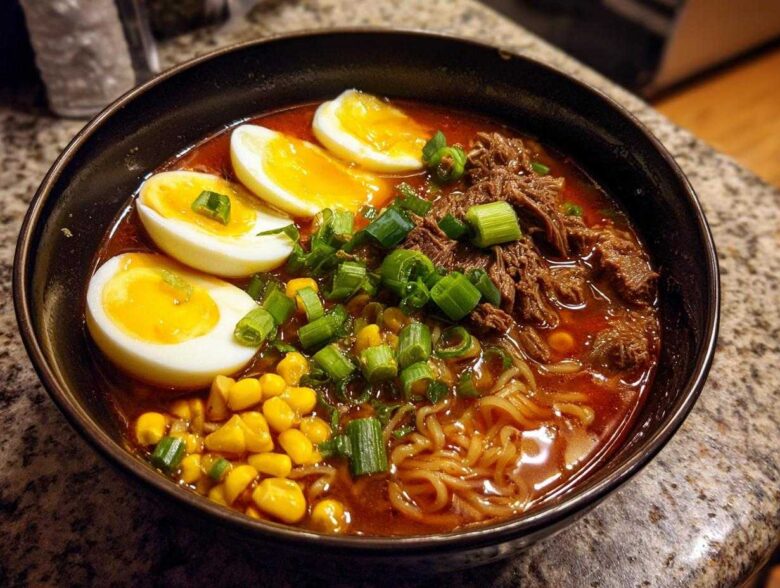
There are few things in this world more comforting than a massive, steaming bowl of ramen pulled hot off the stove after a long, cold day. You know, the kind that makes you lean right over the bowl to slurp it up quickly? I used to spend way too much money chasing that flavor—that perfect punch of savory miso balanced with just enough chili heat—at that little hole-in-the-wall place downtown. But I figured out the secret! You can absolutely nail that restaurant quality right in your own kitchen. This recipe for Spicy Miso Ramen with Soft-Boiled Eggs focuses on building a deeply flavorful tare, making sure your broth isn’t watery, and, the absolute non-negotiable, achieving those gorgeous, jammy-yolked eggs. Trust me, once you master this, your Tuesday nights just got a whole lot better.
If you’ve been looking for a way to elevate your noodle game, you simply must check out my recipe for making quick garlic butter, too; it goes great on the side while you wait for the eggs to marinate! It’s such a quick win.
Why You Will Love This Spicy Miso Ramen with Soft-Boiled Eggs
Honestly, why wouldn’t you love this? It ticks every single comfort food box and surprisingly doesn’t take twelve hours to make. It’s that perfect marriage of rich, spicy, and savory that only comes from a well-developed miso tare base.
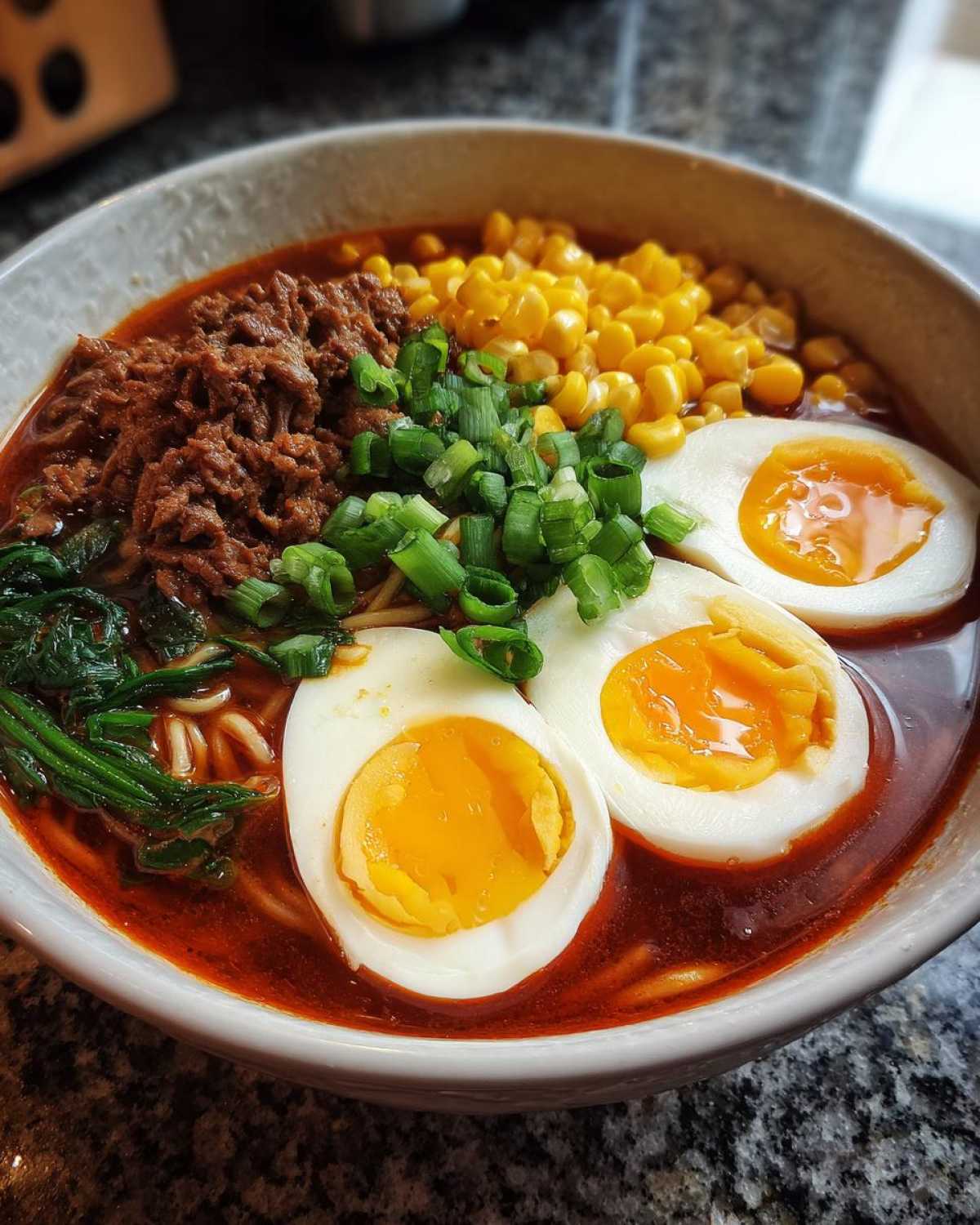
- That Umami Bomb Tare: We take the time to toast the miso and chili pastes together. That little step wakes up all the deep, savory flavors, making this much more exciting than just stirring miso into hot water.
- Restaurant Quality Ramen at Home: You don’t need a plane ticket to enjoy true depth of flavor! I’ve broken down all the tricks so you can serve up real, authentic tasting bowls right here.
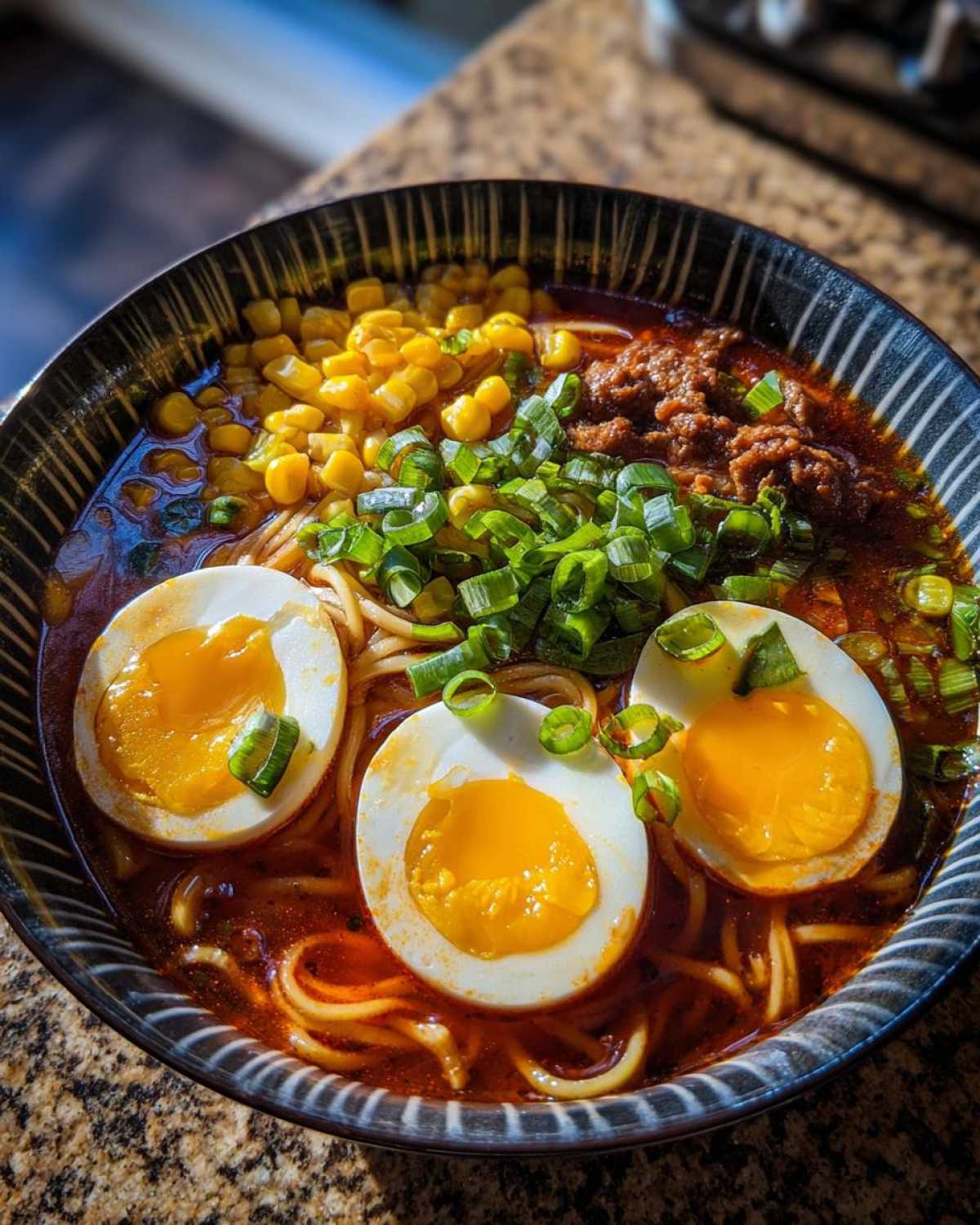
- The Ultimate Jammy Egg: Forget rubbery, pale yolks! We nail that perfect 6-minute 30-second egg every single time, and marinating it in soy sauce makes it gorgeous inside and out. It’s the star of our Spicy Miso Ramen with Soft-Boiled Eggs.
- Perfectly Balanced Heat: You are in total control of the spice level. Add a little chili oil for a gentle warmth, or go heavy if you like that fiery kick—it’s totally up to you!
Essential Ingredients for Your Spicy Miso Ramen with Soft-Boiled Eggs
Okay, the secret weapon in any killer ramen is never the noodles—it’s the broth! For this deep, savory, spicy bowl of happiness, our **Spicy Miso Ramen with Soft-Boiled Eggs**, we need to build layers. Don’t rush to the grocery store and just grab the first miso tub you see! We need two types working together for the perfect texture and flavor profile, so pay close attention to quantities here.
We’re focusing on the tare base, the eggs (which need time!), and the high-quality supporting cast. Make sure you have everything ready before you start heating up the pan; trust me, once that garlic hits the oil, things move fast!
- Sesame Oil: Just 1 tablespoon to start everything off nice and fragrant.
- Ground Meat: I prefer ground pork because it has great fat content, but chicken works too! We need about a pound.
- Aromatics: Two fat cloves of garlic, minced up fine, and about a tablespoon of fresh ginger that I always grate myself—it’s just punchier.
- The Miso Duo: This is vital! You need 1/4 cup of red miso paste (for that deep, salty, earthy base) AND 1/4 cup of white miso paste (for sweetness and smoothness).
- Sauces & Heat: 2 tablespoons of soy sauce, 1 tablespoon of chili bean paste (Tobanjan is *the* key player here), and about 1 teaspoon of chili oil. You can always add more chili oil later for heat, but you can’t take it out!
- Stock: 6 cups of good quality chicken or vegetable stock. If you have homemade, do it!
- Sweetener & Umami: 1 tiny teaspoon of sugar to balance the salt and a half teaspoon of dried bonito flakes. They dissolve right in, and they boost that essential savory note.
If you’re looking for more specific guidance on making that tare explode with flavor before you even add the stock, you should dive into my guide on the Best Tips for Spicy Miso Tare!
For the Perfect Soft Boiled Ramen Eggs
These aren’t just regular eggs; these are marinated magic bombs waiting to ooze into your soup. We only use the freshest, largest eggs we can find. You’ll notice we don’t cook these in the main broth; they get their own special treatment!
- 4 large, fresh eggs.
- A marinade bath made up of 1/2 cup of soy sauce. That’s it! No water dilution here—we want saturation!
The absolute requirement here is patience with the marinating time. Don’t just peel them and drop them in for ten minutes; they need at least two hours—overnight is better—to soak up that beautiful salty, dark color.
Toppings and Noodles for Spicy Miso Ramen
The noodles set the stage, and the toppings make the party! For the noodles, if you can find fresh ramen noodles at your local Asian market, grab them! They cook in a minute and give you the best slurp factor. Dried noodles are fine if that’s what you have, just follow their package directions exactly.
- Noodles: 4 servings of fresh or dried ramen noodles.
- Toppings: We need something crunchy and fresh! Sliced green onions are a must—use the white and green parts. Sweet corn kernels add a pop of surprise, and a sheet or two of crispy nori seaweed wafer looks professional and tastes amazing.
- Optional Treat: If you happen to have some bean sprouts nearby, toss them in at the very end for extra crunch.
Remember, the payoff for all this prepping is the perfect bowl of **Spicy Miso Ramen with Soft-Boiled Eggs**!
Step by Step Guide to Restaurant Quality Spicy Miso Ramen with Soft-Boiled Eggs
Alright, time to get down to business! Making this restaurant-worthy soup takes a little juggling, but if you follow the order I lay out, it goes smoothly. Since those incredible marinated eggs need time to soak up all that flavor, we tackle them first. You really can’t rush perfection, especially with jammy yolks involved! We’ll use the provided instructions as our roadmap for creating the best Spicy Miso Ramen with Soft-Boiled Eggs you’ve ever made.
Mastering the Perfect Soft Boiled Ramen Eggs (Ajitsuke Tamago)
This is crucial! Get a small pot of water boiling—a real, rolling boil, almost angry looking. When it hits that point, gently lower your 4 eggs in. You need to be precise here; boil them for exactly 6 minutes and 30 seconds. Don’t hover, don’t check your phone, just count! The second the timer goes off, scoop them out with a slotted spoon and drop them straight into a big bowl of ice water. That shock stops the cooking dead, locking in the center perfectly. Once they are completely cool underneath, peel them carefully—mine always seem to protest a little, so take your time! Then, put those peeled beauties into a small container and completely cover them with that soy sauce marinade. Pop that right in the fridge for at least two hours. Seriously, overnight is better; they turn into flavor sponges!
Developing the Flavorful Spicy Miso Tare Base
Now we build the soul of the soup! Grab your biggest stockpot or Dutch oven and get that sesame oil heating over medium-high heat. Toss in your ground pork or chicken and break it up with your wooden spoon until it’s totally browned and cooked through. Drain off any excess fat—we want flavor, not oil slicks!
Next, toss in your minced garlic and grated ginger. You only cook this for about 60 seconds until your kitchen smells incredible, careful not to burn the garlic, okay? Here’s where the magic happens for our **Spicy Miso Ramen with Soft-Boiled Eggs**. Reduce the heat down to medium-low—we are toasting, not burning! Now stir in *both* your red and white miso pastes, the soy sauce, the chili bean paste (Tobanjan!), the chili oil, and that pinch of sugar. Stir this thick mess constantly for about two full minutes. If you want to see how I get the absolute best depth here, check out my Step by Step Miso Ramen Guide—it has extra nuance on this exact stage!
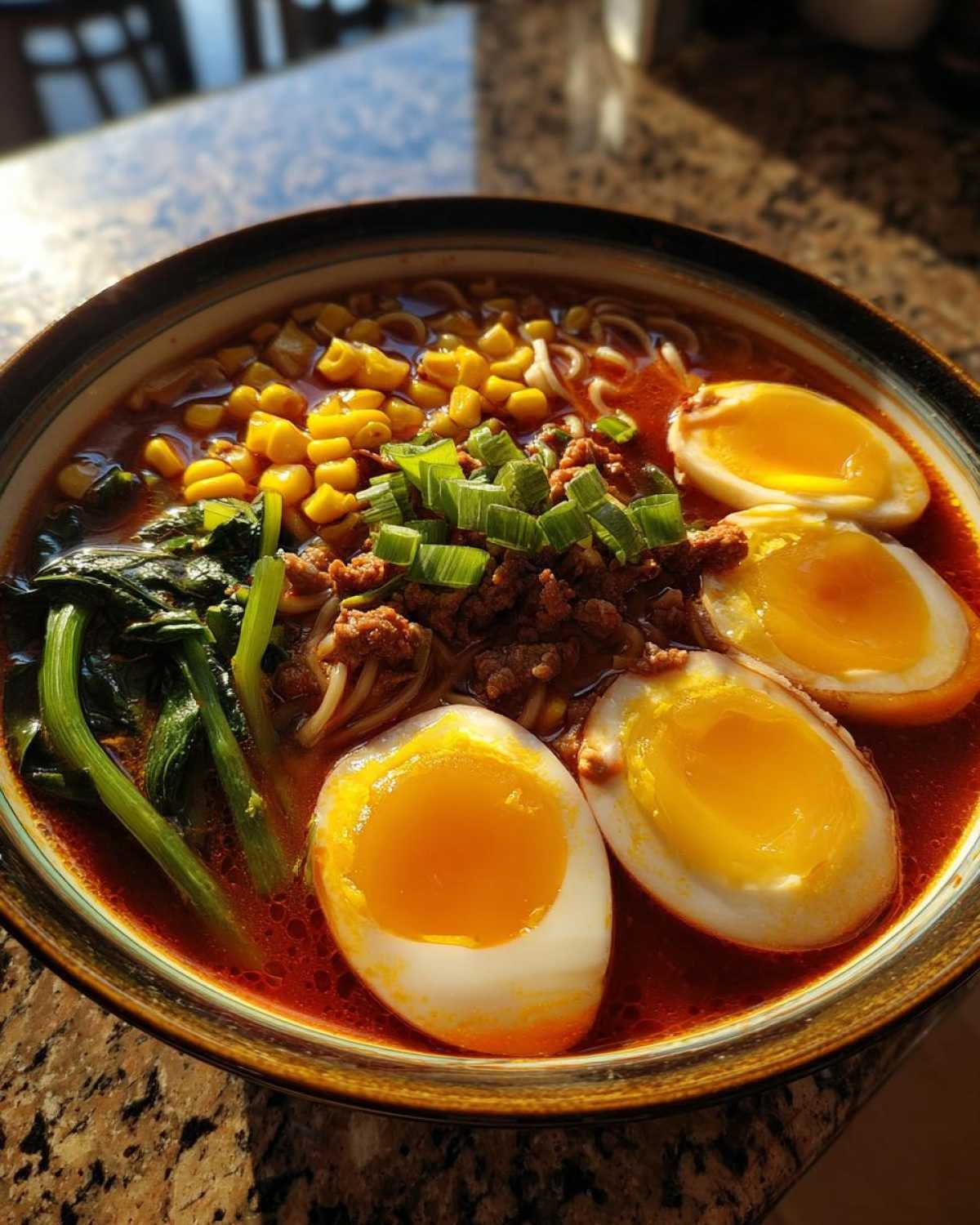
You’ll notice it getting darker and smelling richer; that’s the miso toasting and releasing all its umami power. Perfect!
Simmering the Spicy Miso Broth for Spicy Miso Ramen with Soft-Boiled Eggs
Once that tare paste is perfectly toasted, dump in your 6 cups of chicken or vegetable stock right away to stop the toasting. If you’re using those optional bonito flakes, toss them in now too. Turn the heat up just enough to bring the mixture to a gentle simmer; don’t let it get a violent, rolling boil, or you might accidentally erase some of the delicate miso flavor. Give it about 10 minutes to marry all those initial flavors together. The most important part comes now: Taste it! Is it spicy enough? Add more chili oil if needed. Does it need a bit more salt? Add a splash of soy sauce. Once you feel like this broth is the absolute best **Spicy Miso Ramen with Soft-Boiled Eggs** broth ever, keep it on the lowest possible heat to stay steaming hot while you finish the noodles.
Assembly: Building Your Spicy Miso Ramen Bowl
It’s plating time, the grand finale! Cook your ramen noodles exactly according to their package directions—usually just a few minutes. Drain them really well; soggy noodles equal sad ramen, so shake that strainer vigorously! Divide those hot, drained noodles evenly among your four deep ramen bowls.
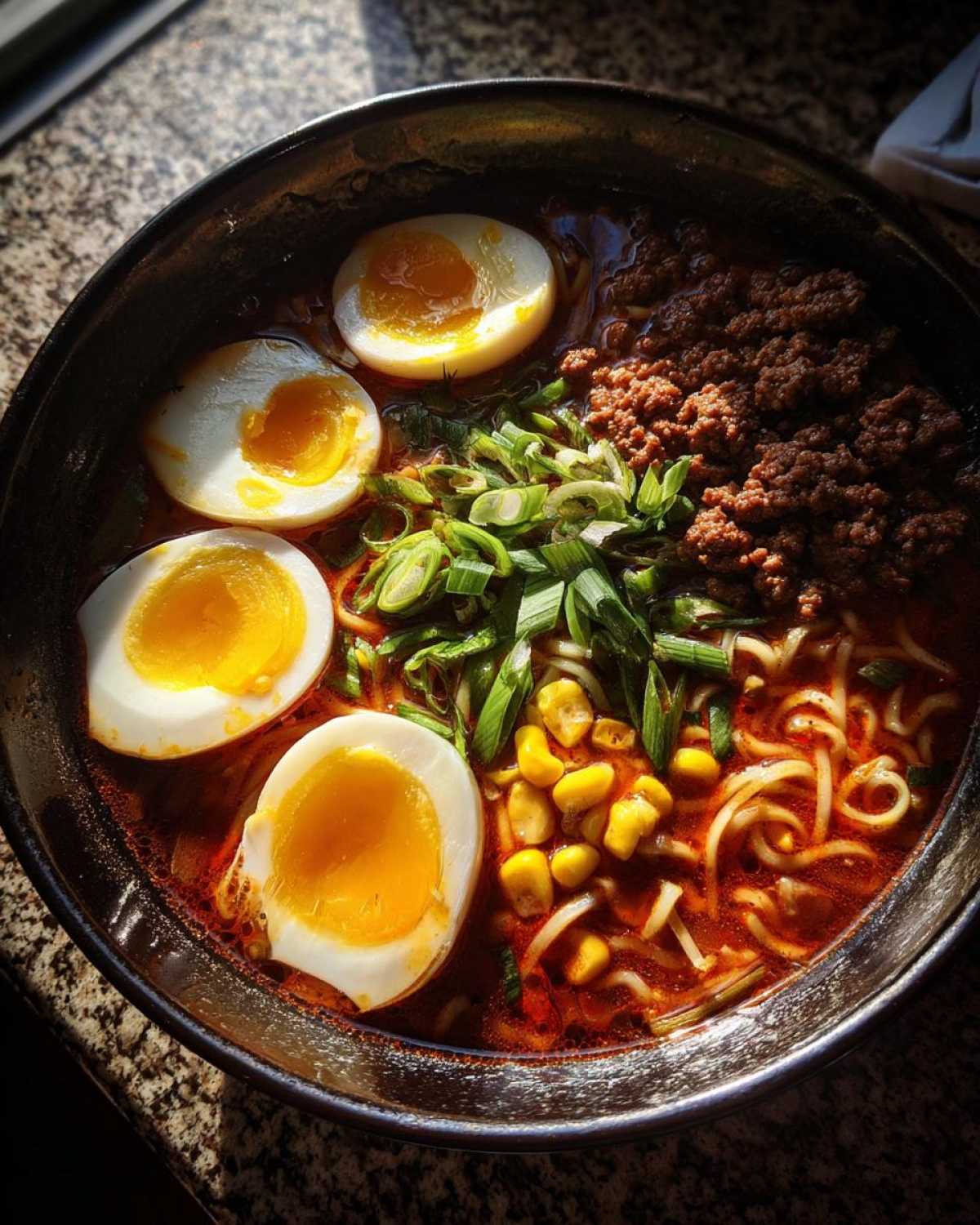
Now, take that gorgeous, deeply flavorful broth and ladle it generously over the noodles, making sure everyone gets plenty of the savory meat bits too. Next, pull those dark, beautiful marinated eggs from their bath. Slice each one carefully right down the middle lengthwise so that gooey center is visible. Place two halves gently into each bowl, yolk-side up if you’re feeling fancy, surrounded by those toppings we prepped earlier—green onions, corn, and a crispy sheet of nori. Seriously, serve this **Spicy Miso Ramen with Soft-Boiled Eggs** immediately while it’s screaming hot!
Expert Tips for the Best Spicy Miso Ramen with Soft-Boiled Eggs
I’ve made this recipe easily thirty times now, tweaking and tasting, and I’ve figured out a few insider secrets that really take it from ‘really good’ to ‘I think I’m eating in Sapporo’ territory. Getting the absolute best flavor out of your **Spicy Miso Ramen with Soft-Boiled Eggs** is all about understanding your ingredients and being brave enough to adjust them on the fly!
First up: Miso Types. We use red and white, right? If you can only find one, or you want even more depth, try using a blend of white and *hatcho* miso (which is dark brown and super rich). Just swap out a little bit of the red for hatcho, but be careful—it’s intense! Or, for a brighter flavor profile, use slightly more white miso, but remember you might need a little extra soy sauce to bring the saltiness back up.
Handling the Heat
Chili oil amount is super personal, and honestly, that’s the fun of this recipe. If you don’t have Tobanjan (chili bean paste) or you find the heat lacking after simmering, don’t just dump in more chili oil! The best way to bump up the heat *and* the flavor is to use a pinch of dried crushed red pepper flakes when you are frying the garlic and ginger. It blooms in the toasted oil and gives you a cleaner, sharper heat that doesn’t muddy the miso flavor.
Broth Upgrades for Next Level Flavor
If you are patient and want that massive, creamy mouthfeel that the big ramen chains have, you absolutely *must* try substituting half of your chicken stock with pork bone broth, or *tonkotsu*. It adds richness that chicken stock just can’t carry. For an even quicker flavor boost on the broth itself, try adding a teaspoon of dried shiitake mushrooms when you add the bonito flakes. They fully reconstitute in the hot broth and release a huge wave of earthy, savory goodness. If you want to toss your noodles in a different way entirely, I love using my quick fried noodles technique sometimes, but for this soup, I stick to boiling them separately.
Don’t forget to taste and adjust your broth *after* adding the stock—that’s when everything mellows out. If it tastes thin, try stirring in about 1 teaspoon of extra soy sauce or a tiny bit more miso at the very end, but heat it gently after adding the extra miso so you don’t start the toasting process all over again. This ensures your **Spicy Miso Ramen with Soft-Boiled Eggs** is perfectly seasoned every time. For more ideas on creating that amazing base, take a look right here at my thoughts on Flavorful Spicy Broth for Noodles.
Ingredient Notes and Substitutions for Spicy Miso Ramen
I know that getting all the specialized ingredients for a recipe like this can sometimes feel impossible, especially if you don’t live right next to a huge Asian supermarket. But don’t panic! While I swear by the ratios in this Spicy Miso Ramen with Soft-Boiled Eggs recipe, we can definitely make some smart swaps so you can have dinner on the table tonight. The real goal here is balancing salty/savory, sweet, and spicy.
Miso Paste Swaps
We called for half red and half white, which gives you that perfect savory depth without tasting overly salty or too sweet. If you only have one type, go with white miso if you’re making a lighter soup feel, or use red miso if you want that intensely earthy, fermented flavor. If you use only red, cut the soy sauce amount down by half a tablespoon because the red paste is naturally saltier. If you only have white, you might need to add a teaspoon of soy sauce or a tiny bit of tomato paste for a bit of that deep color we usually get from the red stuff.
What If I Don’t Have Chili Bean Paste (Tobanjan)?
This is a really common question! Tobanjan is fantastic because it brings heat *and* fermented soybean depth. If you don’t have it, don’t worry at all. Your best bet is to substitute it with Gochujang (Korean Chili Paste). Use about the same amount, one tablespoon. Gochujang is usually a little sweeter, so when you are tasting your broth later, just make sure you don’t need to add that pinch of sugar. If you have neither, just double the amount of chili oil you use, and maybe add 1/2 teaspoon of regular soy sauce to make up for the lost fermented aspect.
Ground Meat Alternatives
My recipe uses ground pork because the fat renders out and adds a richness that coats the chili oil nicely, but you can totally switch it up. Finely ground dark meat chicken works beautifully! If you are vegetarian or vegan, the easiest swap is to omit the meat entirely and use a high-quality vegetable stock. In that case, you MUST boost the umami elsewhere. Toss in an extra handful of dried shiitake mushrooms when simmering or add a teaspoon of mushroom powder or vegetarian oyster sauce to replace that savory meat base in your broth for your delicious **Spicy Miso Ramen with Soft-Boiled Eggs**.
Stock Choices
I listed chicken or vegetable stock, and both are great starting points, especially if you are pressed for time. If you use only vegetable stock, you miss out on that subtle meaty richness. If you have access to any type of bone broth—chicken, beef, or even mushroom stock—using even half of that instead of plain water-based stock will immediately give your soup a glossy mouthfeel and much deeper flavor without adding any extra work.
Storing Leftovers and Reheating Your Asian Noodle Soup for Dinner
I always hope for leftovers because ramen reheats surprisingly well, but you absolutely cannot store it assembled! If you try to put a fully built bowl of ramen into the fridge, I guarantee you’ll wake up to a sad, mushy, clumpy mess. The noodles, bless their hearts, soak up every molecule of broth the moment they sit together, so we have to keep things separate!
For the broth, let it cool down completely (but don’t leave it out too long, we want to keep things sanitary!). Pour the broth into an airtight container. It keeps beautifully in the fridge for about three days. Remember, this is where all the flavor is, so make sure that container seals tightly!
Separating the Good Stuff
Here’s the key to having great leftovers: store the noodles separately from everything else. If you cooked a batch of noodles for dinner, drain them really, really well, maybe even toss them with just a tiny slick of neutral oil so they don’t clump into one giant starch ball. Put the noodles in their own container.
Keep your toppings—the raw green onions, the perfectly marinated eggs, the corn, the nori—in their own little containers, too. The eggs are fine with the broth storage, but greens wilt if they sit in liquid overnight.
The Reheating Process
When you’re ready for round two of your amazing spicy soup, pull out the broth container and pour it into a saucepan. Heat this slowly over medium heat until it’s piping hot again. Never blast it on high heat because we don’t want to boil off all that flavor we worked so hard to build!
Once the broth is hot, cook your leftover noodles separately again—you can just plunge them into boiling water for 30 seconds to refresh them before draining. Reassemble your bowl just like before: noodles first, then ladling that beautiful, reconstructed spicy broth over top, slicing those jammy eggs, and piling on the fresh toppings. It tastes almost as good the second day! For more ideas on how to pull off an amazing Asian Noodle Soup for Dinner, you can check out some of my other favorite recipes!
Frequently Asked Questions About Spicy Miso Ramen with Soft-Boiled Eggs
I get so many questions about how to make sure this soup hits perfectly every time, especially if you’re trying to get that restaurant feel without leaving your house! We want this to be your go-to for an Easy Ramen Night Recipe, so let’s knock out those last few worries. The main thing to remember is that the flavor comes from the tare, not just simmering forever, so don’t stress about cooking it for hours!
Can I make the Spicy Miso Broth ahead of time?
Oh yes, you absolutely can! In fact, I highly recommend it. The broth base—that miso tare we worked so hard to toast with the aromatics and chili pastes—can be made up to three days ahead of time. Just make the tare, add your stock, bring it to a simmer, taste, and adjust seasoning, then let it cool completely before storing it airtight in the fridge. When you’re ready to eat, just reheat it gently, cook your fresh noodles, and slice those eggs.
What is the best way to achieve jammy yolks for ramen?
I cannot stress this enough: timing is everything! You must start your eggs in a full, rolling boil and cook them for precisely 6 minutes and 30 seconds for that perfect center. Once the time is up, yank them out immediately and shock them in an ice bath. I mean fully submerged in ice water for at least five minutes. If you skip the ice bath, they keep cooking on the counter and you end up with hard yolks, which just isn’t right for this savory noodle dish! The ice bath locks in that beautiful, jammy texture right where we want it.
Is this the most Authentic Spicy Miso Ramen Recipe?
That’s a great question! “Authentic” in ramen can mean a dozen different things depending on the region of Japan you’re looking at. This recipe takes traditional Japanese techniques—specifically using a deeply developed tare instead of just adding miso to stock—and combines two types of miso pastes for maximum flavor. While a dedicated Tokyo shop might use a different kind of pure pork broth (tonkotsu) or use an even more complex layering system for their chili oil, this recipe captures the essential *soul* of spicy miso ramen. If you follow the steps for toasting the miso and marinating those eggs for your **Spicy Miso Ramen with Soft-Boiled Eggs**, I promise you, you’ll get a dish that rivals your favorite local spot for a satisfying weeknight meal!
Estimated Nutritional Data for This Savory Noodle Dish with Egg
I know some of you are tracking points or counting macros, and while I’m usually throwing caution to the wind when it comes to something this delicious, I’ve jotted down the estimations based on the core recipe details. Please remember this is for one bowl, and it can vary a LOT depending on how much pork fat you drain off and exactly how much soy sauce you use for your egg marinade!
We are working with a heavier sodium count here because we are using soy sauce and miso paste, which are salty powerhouses, but boy, is it worth it for that fantastic umami kick in this **Savory Noodle Dish with Egg**!
- Serving Size: 1 bowl
- Calories: ~550
- Protein: ~35g (Thanks mostly to that ground meat and the protein in the eggs!)
- Total Fat: ~25g
- Saturated Fat: ~8g
- Carbohydrates: ~55g
- Fiber: ~4g
- Sodium: ~1800mg (Yes, that’s high, measure your soy sauce carefully!)
If you’re watching sodium, I always recommend using a low-sodium stock, which can bring that number down significantly without changing the core flavor profile too much. Still, when you’re making something that tastes this much like Restaurant Quality Ramen at Home, you just have to accept a little indulgence now and then!
Share Your Spicy Miso Ramen with Soft-Boiled Eggs Creation
Now it’s your turn, friend! I’ve shown you all my weird little secrets for getting that rich tare and that perfect jammy yolk, so I sincerely hope you give this **Spicy Miso Ramen with Soft-Boiled Eggs** a try very soon. Seriously, if you can nail those eggs, you’ve basically won the at-home ramen game!
When you pull off a bowl that looks just as fantastic as it tastes, I absolutely want to see it! Take a great photo and share it across social media—don’t forget to tag me so I can cheer you on. Seeing your successful bowls makes my day!
If you try this recipe, please come back here and leave a rating. If it warmed you right down to your soul, give it five stars! And if you have time, drop a comment below telling me what toppings you decided on. Did you go classic with the corn, or did you throw on something totally unexpected? I’m always looking for new ideas to try out in my own kitchen. Head over to my main blog page to see what else I’m cooking up this week!
PrintSpicy Miso Ramen with Soft-Boiled Eggs
A detailed guide to making rich, spicy miso ramen broth and achieving perfectly jammy soft-boiled eggs for a restaurant-quality noodle soup at home.
- Prep Time: 20 min
- Cook Time: 30 min
- Total Time: 50 min
- Yield: 4 servings
- Category: Dinner
- Method: Stovetop
- Cuisine: Japanese
- Diet: Low Fat
Ingredients
- 1 tablespoon sesame oil
- 1 pound ground pork or chicken
- 2 cloves garlic, minced
- 1 tablespoon fresh ginger, grated
- 1/4 cup red miso paste
- 1/4 cup white miso paste
- 2 tablespoons soy sauce
- 1 tablespoon chili bean paste (Tobanjan)
- 1 teaspoon chili oil (or more to taste)
- 6 cups chicken or vegetable stock
- 1 teaspoon sugar
- 1/2 teaspoon dried bonito flakes (optional)
- 4 servings fresh or dried ramen noodles
- 4 large eggs
- 1/2 cup soy sauce marinade (for eggs)
- 2 tablespoons neutral oil (for frying eggs, optional)
- Toppings: Sliced green onions, corn kernels, sheets of nori, bean sprouts
Instructions
- Prepare the soft-boiled eggs: Bring a pot of water to a rolling boil. Gently lower the eggs into the water. Boil for exactly 6 minutes and 30 seconds for jammy yolks. Immediately transfer the eggs to an ice bath to stop the cooking. Once cool, peel them carefully. Place the peeled eggs in a small container with the soy sauce marinade for at least 2 hours, or overnight.
- Prepare the spicy miso tare base: In a large pot or Dutch oven, heat the sesame oil over medium-high heat. Add the ground meat and cook, breaking it up, until browned. Drain excess fat.
- Add the minced garlic and grated ginger to the pot. Cook for 1 minute until fragrant.
- Reduce the heat to medium-low. Stir in the red miso paste, white miso paste, soy sauce, chili bean paste, chili oil, and sugar. Cook this mixture, stirring constantly, for 2 minutes to toast the miso and deepen the flavor. This is your tare.
- Pour in the chicken or vegetable stock and add the bonito flakes (if using). Bring the broth to a gentle simmer. Taste the broth and adjust seasoning, adding more chili oil for heat or soy sauce for saltiness. Keep warm.
- Cook the ramen noodles according to package directions. Drain well.
- Assemble the ramen: Divide the cooked noodles among four deep bowls. Ladle the hot spicy miso broth over the noodles.
- Slice the marinated soft-boiled eggs in half lengthwise and place two halves on top of each bowl.
- Arrange your chosen toppings, such as sliced green onions, corn, and nori, around the eggs. Serve immediately.
Notes
- For a richer broth, substitute half the stock with pork bone broth (tonkotsu).
- If you do not have chili bean paste, use Gochujang or increase the amount of chili oil.
- Marinating the eggs in the soy sauce mixture is key for flavor and color; do not skip this step if time allows.
Nutrition
- Serving Size: 1 bowl
- Calories: 550
- Sugar: 8
- Sodium: 1800
- Fat: 25
- Saturated Fat: 8
- Unsaturated Fat: 17
- Trans Fat: 0
- Carbohydrates: 55
- Fiber: 4
- Protein: 35
- Cholesterol: 250