

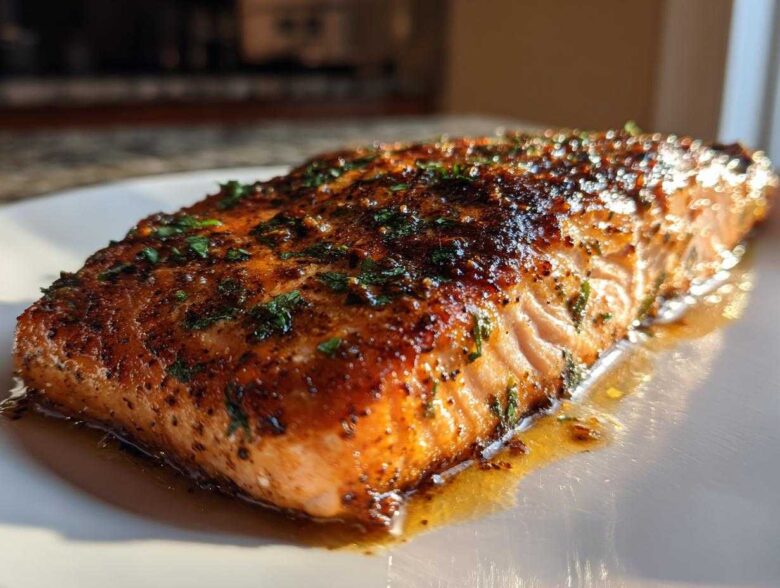
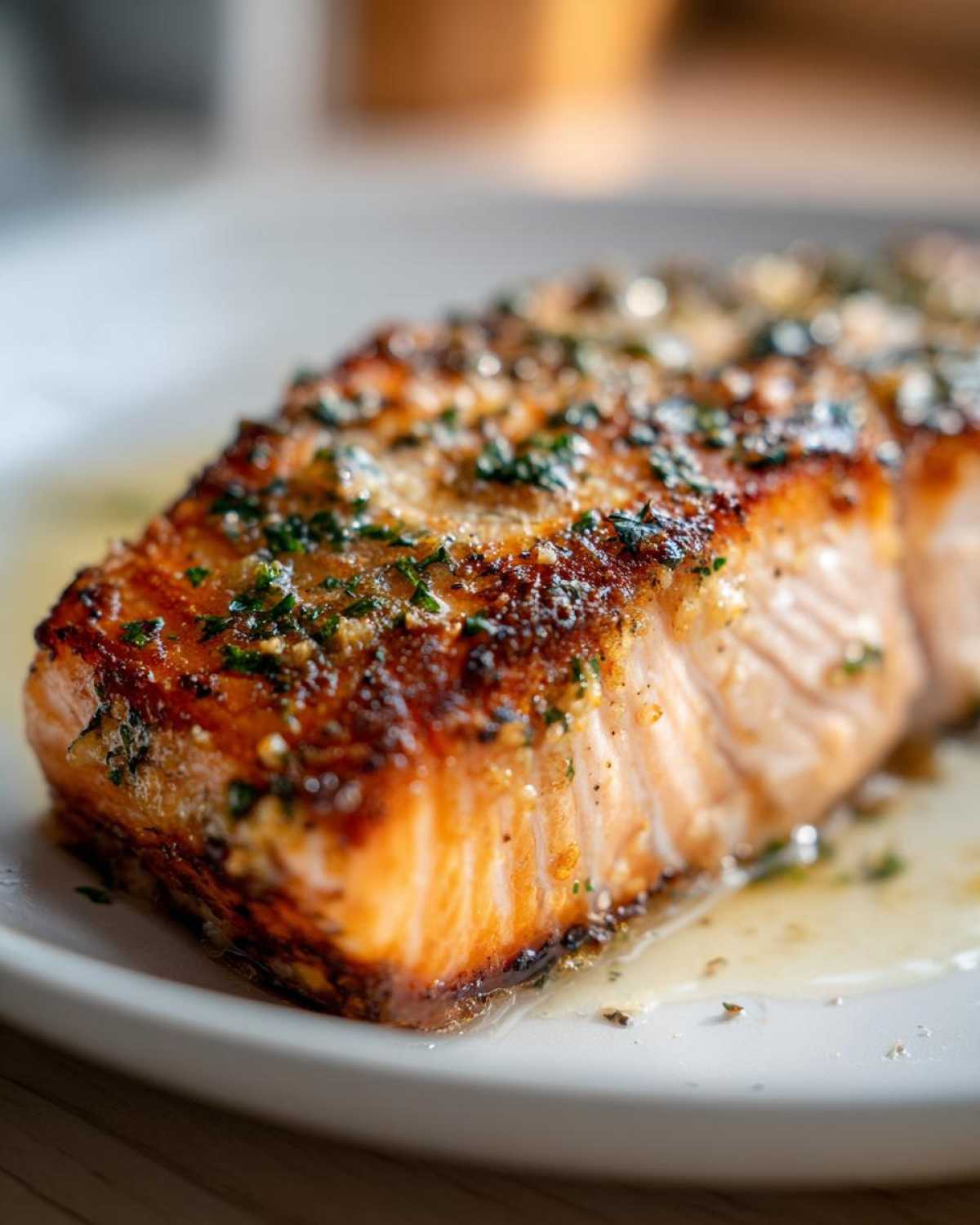
Oh my goodness, let’s talk salmon, because if you’ve ever sighed looking at mushy, pale fish when you were craving that perfect crunch, I’ve been there! I spent years wrestling with fillets that just refused to crisp up. But I cracked the code, and I promise, making **Garlic Butter Salmon with Crispy Edges** at home is way easier than you think. Seriously, you can nail that restaurant-quality sear right on your stovetop, and then finish it off in the oven. Mastering this specific combination of flavor and texture changed my weeknight dinners completely. I’ve got the technique down cold, and I can’t wait to share exactly how I get that gorgeous, crackly exterior while keeping the inside flaky and moist.
After trial and error—and yes, a few slightly smoky kitchen incidents—I figured out the secret isn’t just about the butter; it’s all in the setup. We aren’t just making dinner; we’re building a flavorful, textural masterpiece in under 25 minutes. You absolutely deserve restaurant quality salmon without the reservation hassle, and this method delivers every single time. It’s simple, quick, and packed with bright, savory punch.
If you want to take the garlic butter flavor to the next level even before you start cooking, check out my recipe for making your own easy homemade garlic butter ahead of time! It’s fantastic on everything.
Why This Garlic Butter Salmon with Crispy Edges Recipe Works
This isn’t just another ‘throw it in a pan’ recipe, promise! This method works because it respects what salmon needs to be perfect: high heat for texture and gentle heat for cooking through. It perfectly balances speed and quality, meaning you get something truly special fast enough for a busy night. This is the foundation for any great quick, healthy salmon meal you want to make all year long.
- It guarantees that signature crunch; we don’t mess around when it comes to the edges!
- The lemon brightens the butter, making it rich without being too heavy.
- It’s lightning fast—we’re talking dinner on the table in about 25 minutes total.
Achieving Superior Crispy Edges Every Time
The secret weapon here is starting high! We use super hot oil to sear the salmon skin-side down immediately. You have to trust the process and let it sit still until that skin releases naturally. That initial blast of heat is what locks in the texture we love. Don’t wiggle the fish!
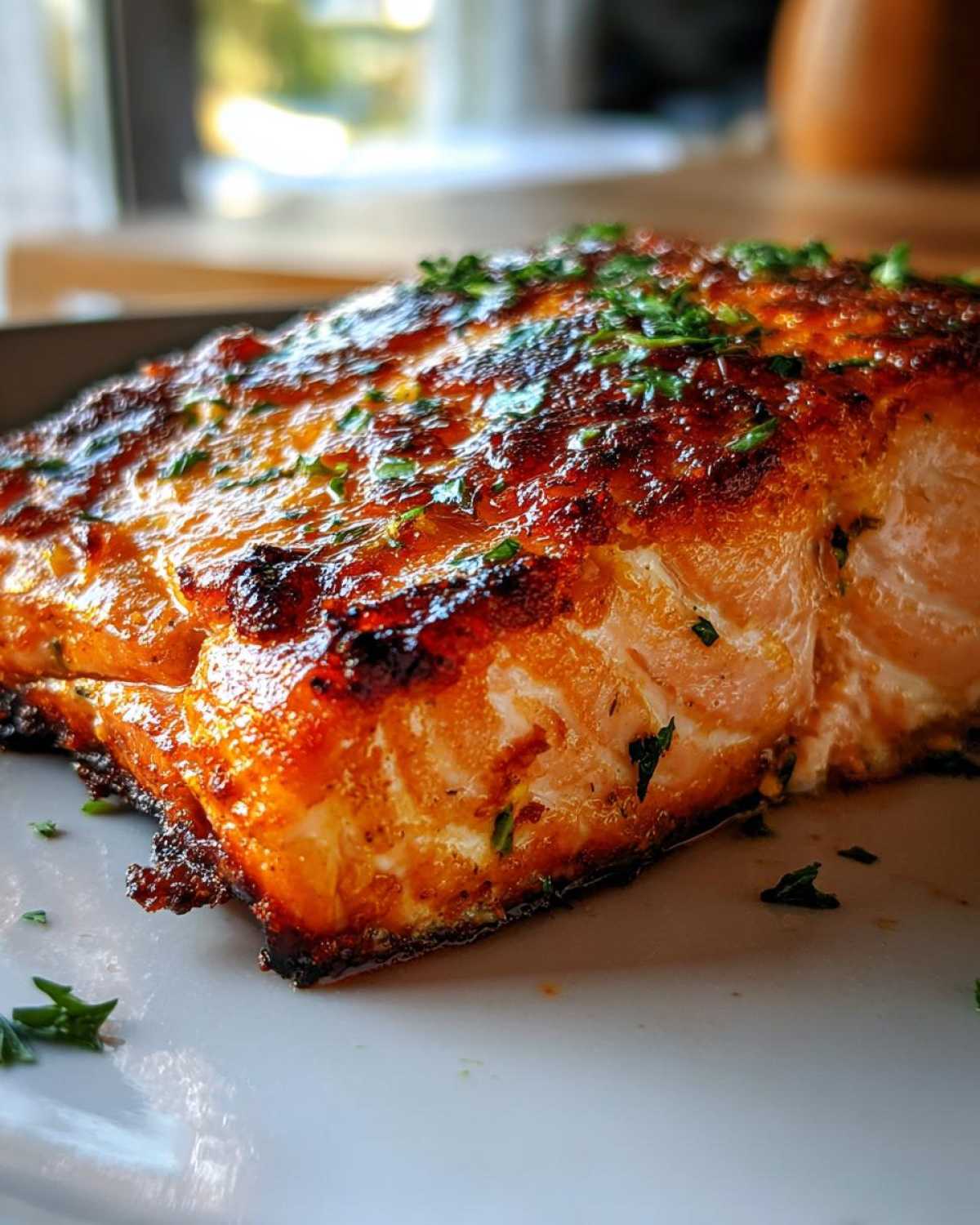
The Rich Lemon Garlic Butter Sauce
Once the searing is done, we create this incredible sauce right in the pan drippings. The fresh minced garlic gets infused into the melted butter, and that splash of lemon juice cuts through the richness beautifully. It’s savory, slightly zesty, and it coats the fish perfectly without overpowering that beautiful salmon flavor.
Gathering Ingredients for Your Garlic Butter Salmon with Crispy Edges
Okay, prepping the ingredients is half the battle won when you’re aiming for speed and quality like this! Because timing is so tight in this recipe, we need everything measured, chopped, and ready to go before the skillet even hits the heat. Don’t start melting butter until your garlic is minced and your fish is patted dry—trust me on this sequencing tip!
We need four lovely salmon fillets, and whether they are skin-on or skin-off really depends on your obsession level with crispiness. If you can get skin-on, definitely go for that; it adds structure and an amazing texture contrast! For the butter, I always insist on unsalted so I can control the salt level myself. You’ll need four tablespoons of that good butter, four cloves—yes, four!—of garlic minced super fine, and a splash of fresh lemon juice to keep things bright.
You can grab all the specifics below, but if you’re making a big batch of butter sauce, remember you can always revisit my full garlic butter recipe for extra sauce to drizzle on later.
- Four (6 ounce) salmon fillets, skin on or off—make sure they’re roughly the same size!
- 2 tablespoons of olive oil—we need one with a relatively high smoke point.
- 4 tablespoons of unsalted butter, divided.
- 4 cloves of garlic, minced finely—no big chunks allowed here.
- 1 tablespoon of fresh lemon juice.
- 1 teaspoon dried parsley for color, though fresh is nice too if you have it sitting around.
- 1/2 teaspoon salt and 1/4 teaspoon black pepper.
Ingredient Clarity and Preparation Notes
Let’s talk salmon thickness first. If you have one giant, really plump fillet and three thin ones, they won’t cook evenly, and then you’ll end up with dry edges on one piece and raw centers on another. Try to find four pieces that are cut consistently. If they are wildly different, let the larger ones sear for a minute or two longer before flipping.
The garlic is non-negotiable—it must be finely minced. If the pieces are chunky, they will burn during that quick sear time and turn bitter. We want that lovely, sweet garlic toastiness, not acrid bitterness! So get out that microplane or sharp knife and take your time mincing it small. This attention to detail is what separates a good fish dinner from that **restaurant quality salmon at home** you’re aiming for!
Step-by-Step Instructions for Pan Seared Garlic Butter Salmon with Crispy Edges
Now we get to the fun part—the actual cooking! This method is my go-to Pan Seared Salmon Recipe because it marries the stovetop sear with the consistency of the oven. Remember, everything happens fast here, so make sure your oven is preheating to 400°F while you start this process. We need high heat underneath to get that satisfying crunch, but we don’t want to burn the delicate garlic butter topping, so the oven finishes the job gently.
First thing’s first: grab those paper towels. You MUST dry your salmon fillets until they feel almost suede-like. If there is any surface moisture, the oil won’t heat the fish; it will just steam it, and steam is the enemy of crispy skin! Season them lightly with your salt and pepper right after drying.
The Essential Step: How to Get Crispy Salmon Skin
Heat your olive oil in a nice, heavy skillet—I swear by cast iron here. You want that oil shimmering; you should see the first little wisp of smoke right before you drop the fish in. Place the salmon skin-side down and DO NOT TOUCH IT for four full minutes. Why? Because when the proteins seize up on the skin, it releases naturally from the pan. If you try to move it too soon, it’ll stick and tear, which is exactly what we don’t want! This technique is honestly the key to **How to Get Crispy Salmon Skin**.
Once you flip it, you’ll see that gorgeous, golden-brown armor! Flip it gently, reduce the heat just a touch to medium-low so the bottom doesn’t scorch while we move to the next phase.
Creating and Applying the Lemon Garlic Butter Sauce
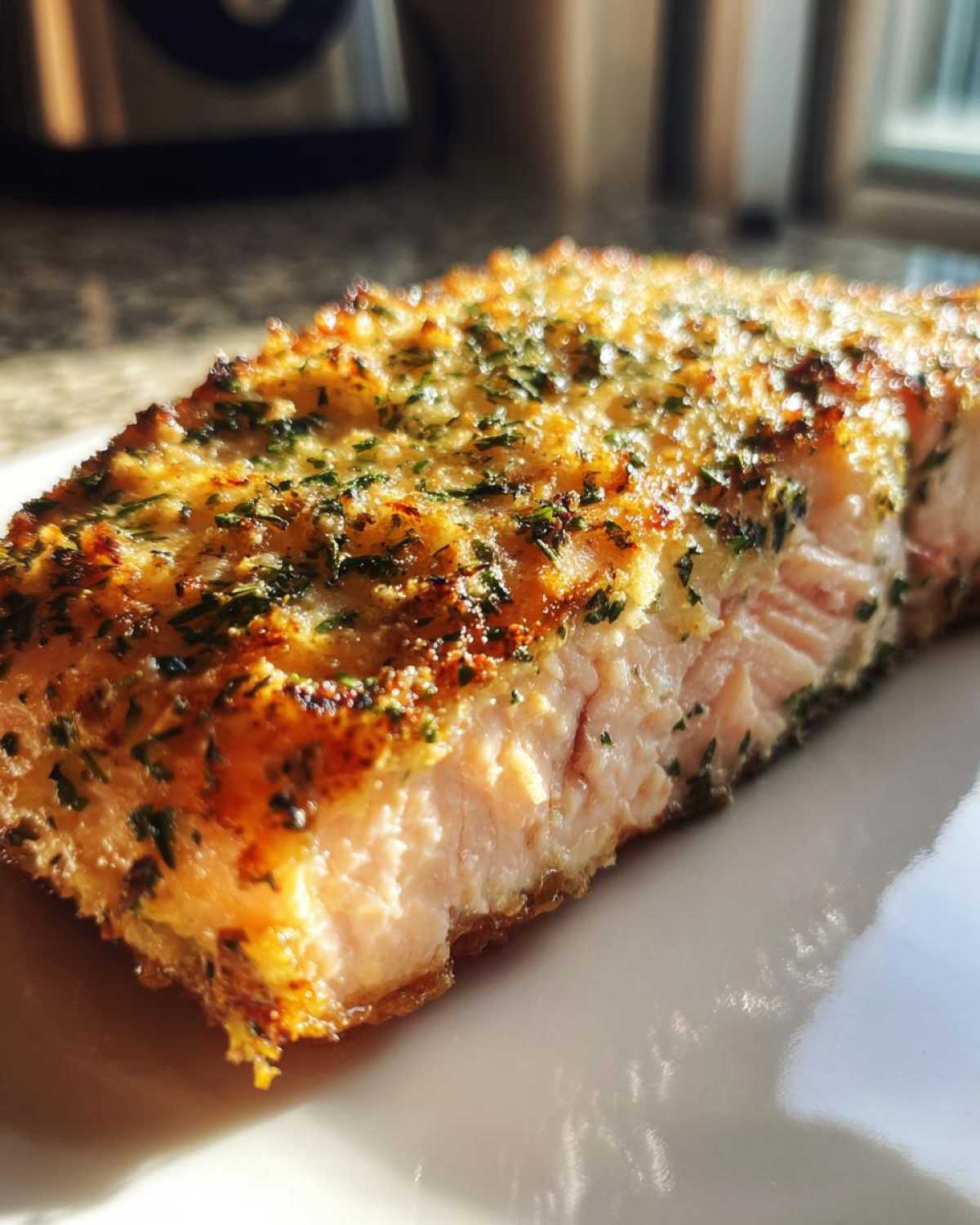
While the fish is searing on the skin side, quickly mix up your butter sauce in a tiny bowl. Melt that butter, toss in your finely minced garlic, lemon juice, and parsley. This happens fast! Once you flip the salmon, you immediately spoon about half of that glorious mixture right over the top of the fillets. We save the rest to spoon on at the very end for a fresh burst of flavor. It’s so important not to pour it all on before the oven, or that garlic will just turn dark brown!
Finishing the Garlic Butter Salmon with Crispy Edges in the Oven
Now, carefully move that oven-safe skillet right into your preheated 400°F oven. Bake it for about 5 to 8 minutes depending on thickness. We are looking for that perfect sweet spot internal temperature of 145 degrees Fahrenheit—that’s how you know you nailed the **moist salmon texture tips**! Pull it out, spoon over that remaining fresh butter right on top, and serve immediately so everyone gets to enjoy those fantastic **Garlic Butter Salmon with Crispy Edges**!
Tips for Restaurant Quality Salmon at Home
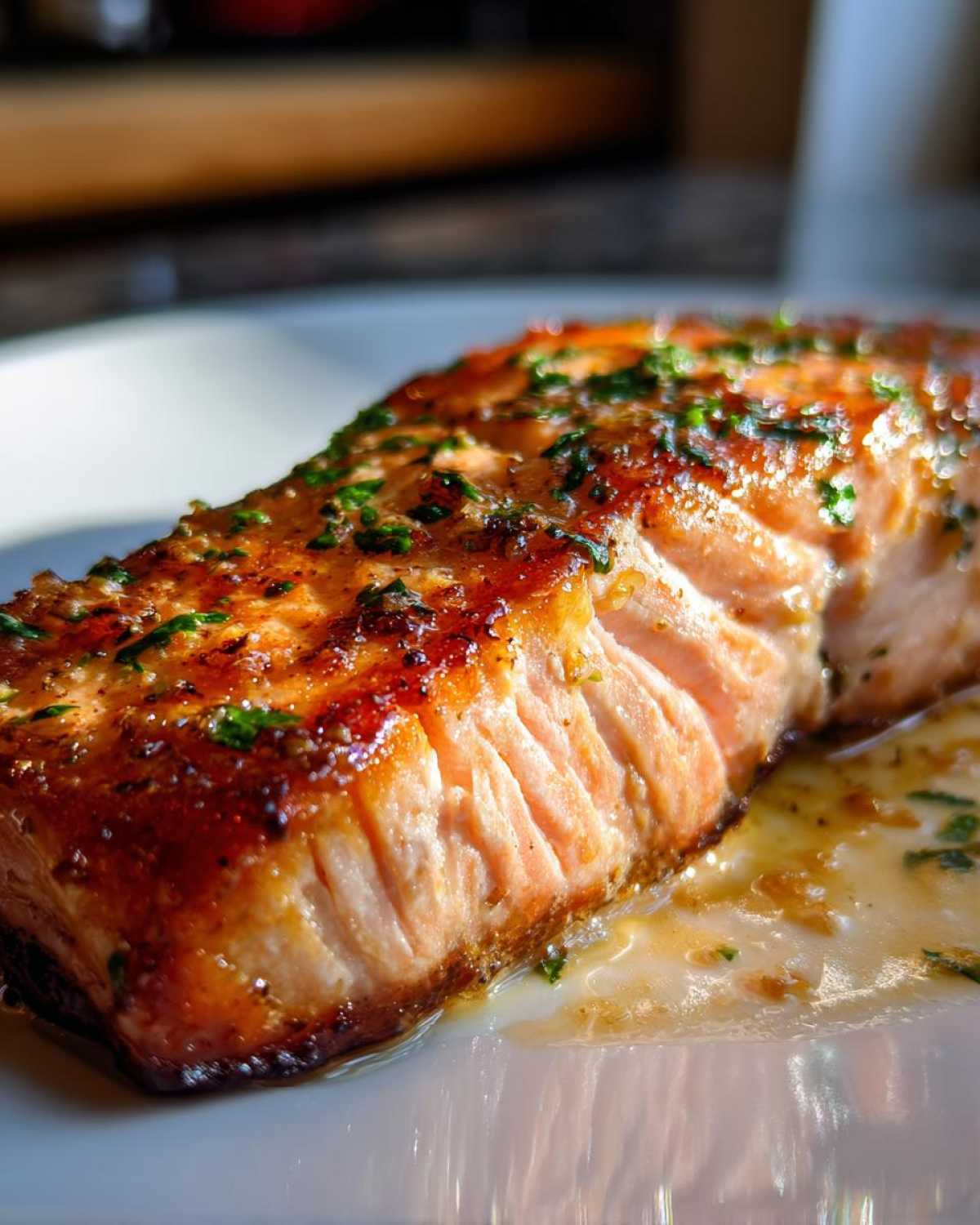
You’ve mastered the sear and you loved the flavor, but maybe one fillet decided to stage a small rebellion, right? Totally normal! Achieving true **Restaurant Quality Salmon at Home** takes practice, and sometimes you need a little troubleshooting guide for those tricky moments. Don’t sweat it—we learn from every fish we cook!
My biggest personal tip when shopping is to look closely at the cross-section of the fillet if you’re buying a large piece cut down. You want the fat lines (the white striations) to be evenly distributed throughout the pink flesh. This distribution is key because as that fat renders out during cooking, it bastes the meat, leading to that incredibly rich and **moist salmon texture** you crave.
If you’re looking for more fantastic ways to keep that moisture locked in, you might want to check out my in-depth guide on Moist Salmon Texture Tips!
Troubleshooting Common Texture Issues
Let’s talk about the two big fails: the stuck skin and the overdone middle. If your skin sticks to the pan, it almost always means one thing: the pan wasn’t hot enough, or you moved the fish too soon. That searing process takes a moment to happen, and you have to wait for the proteins to firm up and naturally loosen their grip on the skillet. If you yank it, it tears!
If the skin releases easily but tears when you flip it, don’t panic! That just means you need to wait about 30 more seconds next time. It’s a sensory thing, really; you’ll feel the tension fighting back less.
Now, if the outside edges look like they’ve been sitting under a heat lamp but the center is still too raw, that’s an oven timing issue. This usually happens with thick fillets. My advice? Once you flip the fish and add the butter, lower that oven temperature slightly—maybe down to 375°F—and leave it in there for two extra minutes. Better to cook slowly at the end than scorch your beautiful garlic butter topping!
Serving Suggestions for Your Easy Weeknight Salmon Dinner
I love how versatile this **Garlic Butter Salmon with Crispy Edges** is! It’s so flavorful that it really only needs simple companions, which is perfect when you’re aiming for an **Easy Weeknight Salmon Dinner**. You don’t want anything that fights with that bright lemon garlic butter; you want things that soak up the extra delicious drippings left in the pan. Keep it light and fresh, or go totally decadent!
When I make this, I usually make whatever I can fit onto a second sheet pan—because less cleanup is always the goal in my chaotic kitchen! If you’re into that, take a look at my recipe for sheet pan garlic herb chicken and veggies. While that recipe is for chicken, the method transfers perfectly to roasting asparagus or broccoli right alongside your salmon.
Vegetable Pairings That Shine
For a really elegant, low-carb plate, I always reach for something with a little bite after searing. Asparagus is my number one go-to—it roasts up quickly in the oven with us while the salmon is finishing. You just toss it with a little olive oil, salt, and pepper; it doesn’t even need the butter sauce spilled on it, it just tastes perfect next to the richness.
Green beans are another fantastic choice. If you steam them briefly until they’re bright green and then just toss them quickly in a hot skillet with a tiny bit of butter and maybe a sprinkle of those herbs, they balance out the meal beautifully. Don’t forget about roasted Brussels sprouts; they get nutty and sweet, which is a lovely contrast to the savory salmon.
Starch Options to Soak Up the Sauce
If you need something more substantial, you need something white and fluffy to catch every last drop of that lemon garlic butter. Simple steamed white rice is great, but my real preference is creamy mashed potatoes. They are just the ultimate sponge for rich sauces like this.
If you’re feeling lazy (which, let’s be honest, is most weeknights), then fluffy couscous is your friend because it takes literally five minutes to prepare. You just pour hot water over it, cover it, and eight minutes later, it’s ready to go. Seriously, it’s almost too fast. Pasta is actually wonderful too; take whatever shape you love, cook it al dente, and then toss it with a little bit of the reserved butter sauce right before plating everything up.
Storage and Reheating Instructions for Garlic Butter Salmon
Okay, sometimes we cook a little too much, or honestly, sometimes I just want the leftovers because this **Garlic Butter Salmon with Crispy Edges** tastes amazing the next day too! But here’s the thing: that beautiful crispiness we worked so hard for? It won’t survive a microwave, I promise you that. The steam trapped inside will instantly turn that perfectly seared skin back into soggy rubber. We absolutely cannot allow that to happen!
If you have any fish left over, the absolute best way to store it is in an airtight container in the fridge. It lasts beautifully for about two days—any longer than that, and the texture starts to degrade, even when stored correctly. Make sure you try to let the fish cool down slightly before you seal the container; putting hot food directly into the fridge can create condensation, which leads to sogginess even before reheating!
The Best Way to Reheat Your Salmon
For the very best results, where you recover some of that initial golden exterior, you need dry heat. Put that appliance that everyone seems to own now—the air fryer!—to work. Set it to about 350°F (175°C) and just give the fillet about 3 to 4 minutes. It crisps up the existing edges without nuking the middle of the fish, making it taste almost freshly made.
If you don’t have an air fryer, the oven works almost as well. Pop the salmon on a baking sheet lined with foil or parchment paper and bake it at a low 325°F (160°C) for maybe 5 to 7 minutes. You just want to gently warm it through. If you check it at the 5-minute mark, you should be good to go!
What About Reheating the Garlic Butter Sauce?
If there was a ton of leftover garlic butter pooled on your plate—and I sincerely hope there was because that’s the best part—you can absolutely save that too! Store it in a tiny sealed jar in the fridge. It will solidify, of course, but when you reheat the salmon, you can gently warm that butter back up on the stovetop or microwave it for about 15 seconds until it’s liquid again. Drizzle it over your reheated fish for that fresh, zingy flavor!
Frequently Asked Questions About Garlic Butter Fish
I always get questions when people try this recipe for the first time, especially around how to keep the texture perfect while managing all that flavor. People want to know if they can cut corners, and while I love being quick, this recipe needs a little respect for the texture!
If you’re looking for the absolute pinnacle of flavor pairings, you must check out my guide to making the Best Garlic Butter Fish sauces—this salmon is just the starting point!
Can I use frozen salmon fillets for this recipe?
You totally can, but you’ve got to treat them right! If you try to sear even slightly frozen fish, you’re guaranteeing a soggy mess because the outside will steam before it ever gets a chance to crisp. You must thaw them completely—I usually do this overnight in the fridge, or if I’m in a total pinch, place the sealed package in cold water, changing the water every 30 minutes.
The most important part, though, happens *after* thawing: you need to pat them bone-dry, even more so than fresh fish. Get those paper towels out and blot, blot, blot! Any remaining ice crystals or surface water will sabotage your sear, and we simply cannot have that when we’re aiming for **Garlic Butter Salmon with Crispy Edges**!
What if I don’t have an oven-safe skillet?
Oh, the dreaded non-oven-safe pan panic! Don’t worry, we can still make this work, but you need to be a bit more hands-on and watchful. You’ll perform the initial sear—the most important part for crispiness—in your regular, non-oven-safe skillet over medium-high heat, just like the instructions say.
The trick is when you go to finish it. You’re going to flip the fish, spoon on the butter, and then *carefully* transfer the entire fillet (using a spatula) onto a foil-lined baking sheet. Then, pop that sheet pan into the 400°F oven. It’s a bit more work moving the fish around, and you might lose a tiny bit of the butter sauce to the transfer, but you’ll still get perfectly cooked fish, even if the edges aren’t quite as evenly coated as when you use the same skillet for the whole process.
Can I substitute the olive oil for more butter in the initial sear?
I get why you’d want to! More butter sounds decadent, right? However, I strongly advise against replacing all the olive oil with butter for the initial sear. Olive oil has a much higher smoke point than butter. If you use all butter on that high heat needed to crisp the skin, the milk solids in the butter will burn before the salmon skin even has a chance to brown. That leads to bitter black spots, not golden crisping! I use the oil to handle the high heat, and then we add the butter later when the heat is lower for flavor. It’s the best of both worlds!
How much does the lemon juice impact the flavor?
The lemon juice is crucial, honestly! Without it, the garlic butter can taste a little heavy or flat after baking. That single tablespoon provides just enough acid to brighten everything up and cut through the richness of the butter and the fattiness of the salmon. If you wanted even more zestiness, you could always add a tiny bit of fresh lemon zest right in with the garlic when you melt the butter. It really elevates this dish into that fantastic, **delicious seafood recipe** territory!
Estimated Nutritional Data for Garlic Butter Salmon with Crispy Edges
I’m never sure how much people care about the numbers when the flavor is this good, but here they are! Because we are working with fresh ingredients and relying on whole foods like salmon and butter, you’ll see a higher fat content, which is necessary for flavor and our amazing crispy edges. Remember that this breakdown is based on dividing the entire recipe among four standard 6-ounce fillets—so your portion size totally dictates your final count.
Please take this as a helpful guide rather than gospel, because my measurement of “a dash of salt” might be different from yours! These estimates are based carefully on the exact recipe listed above. We aim for transparency here so you know exactly what you’re serving up your family.
Here’s the approximate breakdown per serving:
- Serving Size: 1 fillet
- Calories: 350
- Fat: 22g (with 10g being Saturated Fat)
- Carbohydrates: 2g
- Protein: 32g
- Sodium: 350mg
- Sugar: 1g
See? Not bad at all for such a rich and decadent-tasting meal! That high protein content makes this a fantastic option for anyone wanting a **quick healthy salmon meal** that keeps you feeling full for hours. It’s all about those good fats from the butter and the healthy fats from the salmon itself!
Share Your Perfectly Cooked Salmon Fillets Experience
Okay, I’ve poured out all my secrets for you—the high heat, the drying towels, the oven timing—and now I need to hear from you! Did you manage to get those gorgeous, shattering crispy edges? Did the lemon garlic butter sauce sing on your plate? I am genuinely so excited for you to try making this **Garlic Butter Salmon with Crispy Edges**.
Please don’t be shy! Head down to the comments section below and let me know how it went. I want all the details. Did you use skin-on? Did your cast iron skillet do the magic? Were these the best **Perfectly Cooked Salmon Fillets** you’ve ever made at home? A rating helps future readers know they are in the right place for a fantastic, reliable recipe, and leaving a note about a tiny tweak you made helps our whole community!
Also, if you snapped a photo of your beautiful, golden-brown plate, I would absolutely *love* to see it! Tag me on social media so I can gush over your crispy success. If you’re looking for more flavor inspiration, feel free to browse the rest of my kitchen adventures over at my main blog page where I’m always testing new ideas!
Happy cooking, and thank you for trusting my method for getting that perfect sear!
PrintGarlic Butter Salmon with Crispy Edges

Follow these steps to cook salmon fillets with a rich garlic butter coating that results in perfectly crispy skin or edges.
- Prep Time: 10 min
- Cook Time: 15 min
- Total Time: 25 min
- Yield: 4 servings
- Category: Dinner
- Method: Pan Searing and Baking
- Cuisine: American
- Diet: Low Fat
Ingredients
- 4 (6 ounce) salmon fillets, skin on or off
- 2 tablespoons olive oil
- 4 tablespoons unsalted butter
- 4 cloves garlic, minced
- 1 tablespoon fresh lemon juice
- 1 teaspoon dried parsley
- 1/2 teaspoon salt
- 1/4 teaspoon black pepper
Instructions
- Pat the salmon fillets completely dry using paper towels. This step is crucial for crispiness.
- Season both sides of the salmon with salt and pepper.
- Heat the olive oil in a large, oven-safe skillet (cast iron works best) over medium-high heat until it shimmers.
- Place the salmon fillets skin-side down in the hot skillet. Sear without moving for 4 to 5 minutes until the skin is golden brown and crisp.
- Flip the salmon fillets gently. Reduce the heat to medium-low.
- In a small bowl, melt the butter. Stir in the minced garlic, lemon juice, and parsley.
- Spoon half of the garlic butter mixture over the tops of the salmon fillets.
- Transfer the skillet to a preheated oven at 400 degrees Fahrenheit (200 degrees Celsius).
- Bake for 5 to 8 minutes, or until the salmon reaches your desired doneness (internal temperature of 145 degrees Fahrenheit).
- Remove the skillet from the oven. Spoon the remaining garlic butter over the fish immediately before serving.
Notes
- For the crispiest skin, ensure the pan is hot before adding the fish and do not overcrowd the skillet.
- If your fillets are very thick, you may need to add 2-3 minutes to the baking time.
- Serve with roasted asparagus or steamed rice to complete the meal.
Nutrition
- Serving Size: 1 fillet
- Calories: 350
- Sugar: 1
- Sodium: 350
- Fat: 22
- Saturated Fat: 10
- Unsaturated Fat: 12
- Trans Fat: 0
- Carbohydrates: 2
- Fiber: 0
- Protein: 32
- Cholesterol: 95